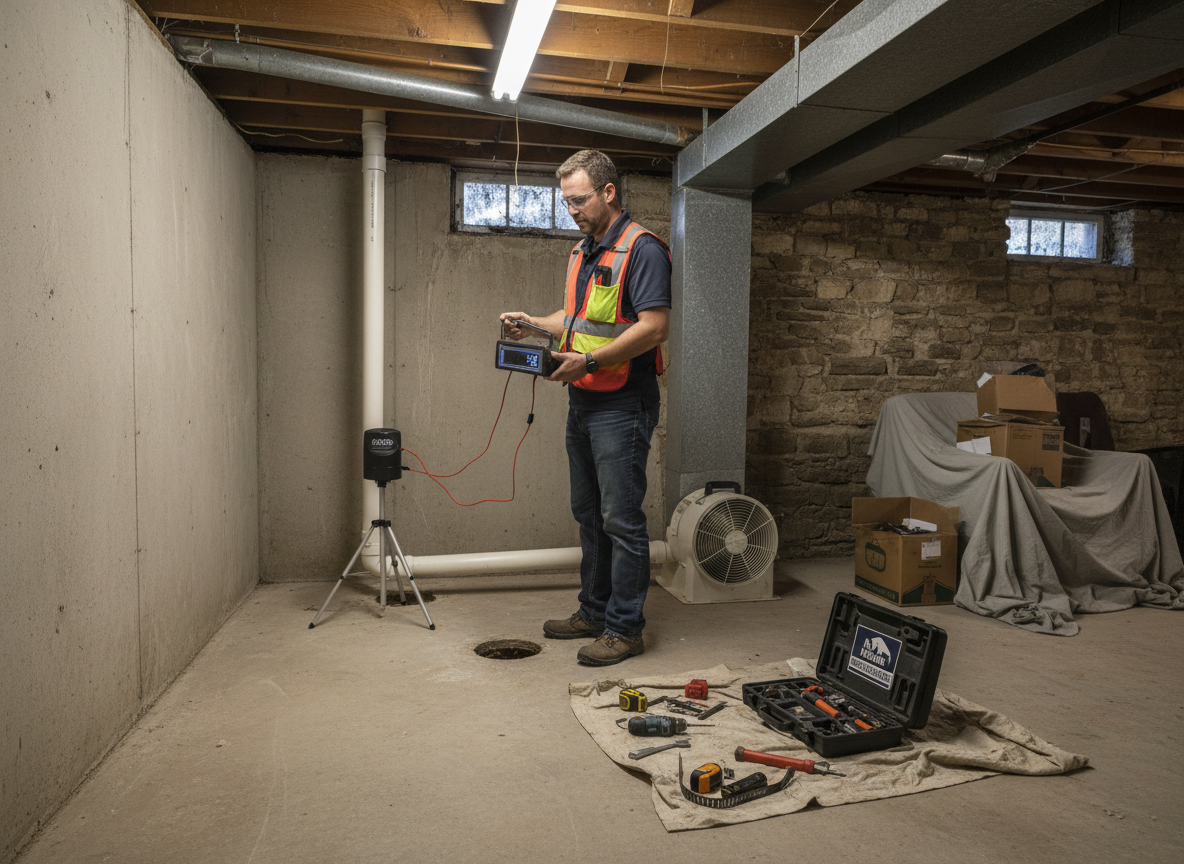
York County sits on geology that regularly pushes radon numbers well above the EPA's 4 pCi/L action level, and the housing stock here makes testing more nuanced than people expect. Older homes in Downtown York and East York often have stone or rubble foundations with dirt crawlspaces, which create multiple entry points radon can travel through, so a single test canister placed in the wrong spot can under-read the real exposure. Newer builds out in Spring Garden Township and around the York Fairgrounds tend to be tighter and more consistent, but they can also trap radon more effectively once the windows stay shut for winter, which is exactly when we recommend testing.
Short-term tests (48-96 hours) are useful for real estate transactions and quick screening, but they're sensitive to weather and household habits. A test run during a mild, windy stretch in April will read differently than the same house tested during a still, cold week in January. We've seen sellers in West York and Pinehurst get a clean short-term result in fall, only to have a winter retest come back double because the furnace was running and windows were sealed tight. Long-term tests (90+ days) smooth out these swings and give a far more honest picture of what occupants actually breathe over a heating season.
Placement matters more than people think. Tests need to go in the lowest lived-in level, away from drafts, exterior doors, and HVAC returns, and at least 20 inches off the floor. We regularly find DIY test kits placed in laundry rooms next to a dryer vent or near a sump pit with an open lid — both of which skew results. Homes with sump pumps, which are common given the region's soil and water table, need special attention because an open or poorly sealed sump crock is often the single biggest radon entry point in the house.
We also flag a regulatory nuance: real estate radon testing in Pennsylvania has specific protocols around tamper-resistant devices and closed-house conditions, and a test done wrong can get challenged during a sale. We follow closed-house procedures on every short-term test — windows and doors shut except for normal entry/exit, no fans pulling outside air — for at least 12 hours before and during the test.
Technician insight
In York, the thing that catches most people out with radon testing is timing it during a mild, windy week and getting a falsely low number — I've seen it happen to sellers in Pinehurst and West York more than once. Homes with old stone foundations and open sump pits, common in Downtown York and East York, also tend to under-test if the device sits too close to a drafty window instead of near the actual entry points.
Short-Term Test Retest After a Suspicious Low Reading
A homeowner in Spring Garden Township had a short-term test come back low during an unusually windy fall week, but the buyer's inspector flagged the timing as unreliable. We retested under proper closed-house conditions in early winter and found levels nearly double the first result, traced mainly to an unsealed sump pit. Sealing the sump and adjusting device placement gave both sides a number they could trust before closing.
Radon Testing Services We Offer
✓Short-Term Radon Testing
48-96 hour test using closed-house protocol, ideal for home sales and quick screening for homes in Downtown York and East York.
✓Long-Term Radon Testing
90-day-plus monitoring that captures seasonal swings, giving a more accurate picture of year-round exposure for occupied homes.
✓Real Estate Transaction Testing
Testing that follows tamper-resistant device and closed-house requirements buyers and lenders expect during a sale.
✓Post-Mitigation Retesting
Follow-up testing after a mitigation system is installed to confirm the fix actually brought levels under the action threshold.
✓Crawlspace and Basement-Specific Testing
Targeted testing in older stone-foundation homes common in West York and Downtown York, where multiple entry points can skew results.
✓Sump Pit and Soil Gas Assessment
Inspection of sump crocks, floor drains, and slab penetrations to identify the entry points contributing most to elevated readings.
Radon Testing Cost in York, PA
| Service | Typical Range | What Affects It |
|---|---|---|
| Short-Term Test (48-96 hr) | $125–$200 | Standard for real estate transactions; price depends on number of test locations |
| Long-Term Test (90+ days) | $75–$150 | Lower cost but requires leaving the device in place for months |
| Post-Mitigation Retest | $100–$175 | Confirms system performance after installation |
| Multiple-Unit Testing (duplex/multi-family) | $150–$350 | Priced per unit tested; more units, higher total |
Ranges are typical for York, PA and confirmed with an exact written quote before any work starts.
How it works
- 1
Walkthrough and Placement
We inspect the foundation type, sump conditions, and HVAC setup to pick the right test location, avoiding drafts and known problem spots.
- 2
Closed-House Setup
For short-term tests we confirm windows and exterior doors stay shut per protocol, starting at least 12 hours before the device goes in.
- 3
Monitoring Period
The device sits undisturbed for the agreed duration — days for short-term, months for long-term monitoring.
- 4
Lab Analysis and Report
Results are read and reported in pCi/L with a plain explanation of what the number means and whether mitigation is recommended.
- 5
Next Steps Consultation
If levels are above 4 pCi/L, we walk through mitigation options specific to your foundation type and budget.
Pricing
Most short-term tests in York County run in a predictable mid-range; long-term monitoring costs less per day but takes months to complete.