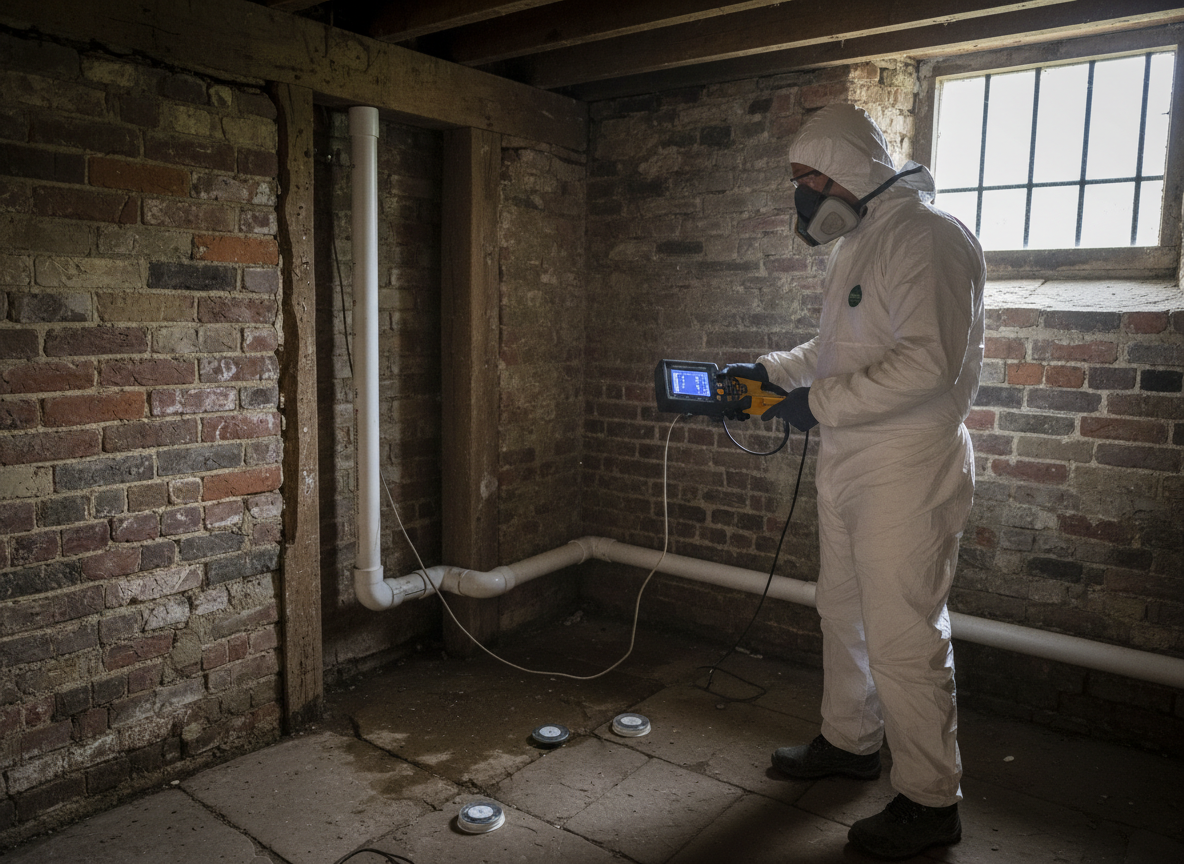
North York sits just off the York Fairgrounds and stretches along Route 30's older grid streets, where a lot of the housing stock dates back to the early-to-mid 1900s with stone or block foundations that were never designed with radon in mind. Those older basements often have dirt floor sections, fieldstone walls with mortar gaps, and sump pits added decades after construction — all of which give radon multiple entry paths that a single-point system won't catch.
We work a lot of homes near the Fairgrounds and along the corridor toward North George Street, where lot sizes are tighter and driveway access to the exterior wall can be limited. That changes where we're able to run exhaust piping and where the fan gets mounted, since we're often threading a system between a narrow side yard and a neighbor's fence line rather than a wide-open lot. Every North York job gets planned around the actual foundation layout, not a generic template.
York County sits on limestone and diabase geology that's known for elevated radon readings, and North York's older housing stock with fieldstone or parged block foundations tends to have more cracks and utility penetrations than newer construction elsewhere in the county. Combine that with our humid continental climate — homes sealed up tight through cold winters and again during hot, humid summers when AC keeps windows shut — and radon has fewer chances to vent naturally, which is exactly why sub-slab depressurization systems matter here.
Around North York
We regularly work near:
- 📍York Fairgrounds
- 📍North George Street corridor
- 📍York County Courthouse (nearby Downtown York)
- 📍Devers neighborhood
- 📍North York Elementary area streets
Radon Mitigation in North York — Local Notes
- •Many North York homes have fieldstone or rubble foundations from pre-1950s construction, which means multiple radon entry points rather than a single crack, so we often need more than one suction point to get consistent readings.
- •Older sump pits added later for basement water issues are common here and need to be sealed and incorporated into the mitigation system, not left as a separate open pathway.
- •Tight side-yard lot spacing near the Fairgrounds area limits where exhaust pipe and fan placement can go, so exterior routing is planned house by house.
- •Cold winters mean homes stay sealed for months, and hot humid summers mean AC keeps them sealed again — both seasons reduce natural air exchange and make mechanical mitigation more important than in shoulder-season months.