2026-09-16 · Dave Kessler
How to Test for Radon in York PA Homes
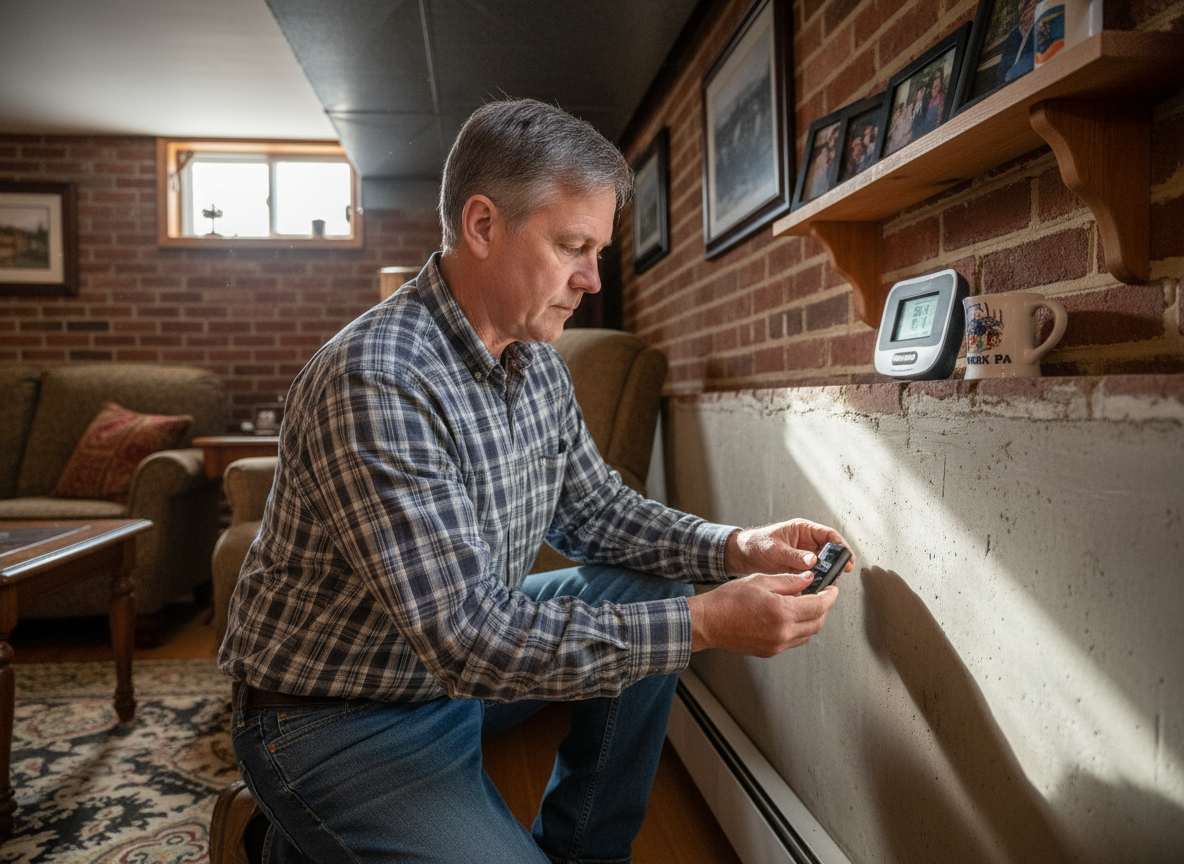
Testing for radon in a York, PA home takes as little as 48 hours with a short-term charcoal kit or up to 90 days with a long-term alpha-track detector, and the accurate number you get depends heavily on where you place the device, what season it is, and whether your house has a basement, crawl space, or slab foundation. In York County, we see elevated readings across neighborhoods as different as Downtown York rowhomes and newer builds out in Spring Garden Township, so testing isn't optional guesswork — it's the only way to know what's actually in your air.
Short-Term vs Long-Term Test Kits
A short-term test (48–96 hours) uses charcoal canisters or electret ion chambers and gives you a quick snapshot — useful before a home sale or when you just want a baseline reading fast. A long-term test (91 days to a year) uses alpha-track detectors and averages out seasonal swings, which matters a lot here because our humid continental climate means homes are sealed tight in winter and opened up in summer, and radon levels can swing 2–3x between those conditions. If you're buying or selling a home in East York or North York on a tight closing timeline, short-term is standard, but if you own the home long-term, a long-term test gives you a truer picture of average exposure.
Where to Place the Test Device
Placement makes or breaks accuracy. We've walked into homes in West York and Pinehurst where a homeowner's DIY kit sat on a windowsill or near a heating vent and gave a wildly unreliable number. Follow these placement rules:
- Put the device in the lowest lived-in level of the home — a finished basement counts, an unfinished crawl space usually doesn't unless you're specifically testing crawl space air
- Keep it at least 20 inches off the floor and away from exterior walls, windows, and doors
- Avoid drafts from HVAC vents, fans, or fireplaces
- Don't place it in a kitchen, bathroom, or laundry room — humidity and cooking fumes skew readings
- Leave windows and exterior doors closed as much as possible during the test window (this is required for short-term tests)
Timing Your Test Around York's Seasons
Radon behaves differently in winter than in summer, and York's cold winters and hot, humid summers create real swings in indoor readings. When homes are sealed tight against the cold from December through February, radon tends to concentrate indoors because there's less natural air exchange — this is actually the best window for a short-term test if you want to catch worst-case levels. Testing in June or July, when windows are open and the AC is cycling outside air, often understates the real risk. If you test in summer and get a borderline result, it's worth retesting in winter before deciding you're in the clear.